Introduction
In 2026, Global Climate News highlights critical environmental changes and emerging trends that are reshaping our planet. From shifts in weather patterns to innovative sustainability initiatives, understanding these developments is crucial for communities, governments, and businesses in the USA and worldwide. Staying informed about global climate news enables individuals and organizations to respond effectively to climate challenges, adapt to emerging risks, and support strategies that mitigate environmental impact. This article provides a detailed exploration of key climate trends, scientific findings, and actionable insights.
Key Content
Rising Global Temperatures
Heatwave Trends
Data from recent years shows a consistent rise in global temperatures, leading to more frequent and severe heatwaves.
Regional Impacts
Regions in North America, Europe, and Asia are experiencing unprecedented summer temperatures, affecting ecosystems, agriculture, and public health.
Environmental Consequences
Rising temperatures contribute to droughts, wildfire risks, and declining biodiversity.
Extreme Weather Events
Hurricanes and Storms
Stronger and more unpredictable storms are increasingly recorded across coastal areas.
Flooding Patterns
Excess rainfall and melting ice caps contribute to severe flooding in vulnerable regions.
Preparedness Measures
Enhanced infrastructure and early warning systems are critical for minimizing damage and protecting communities.
Renewable Energy Adoption
Solar and Wind Power Expansion
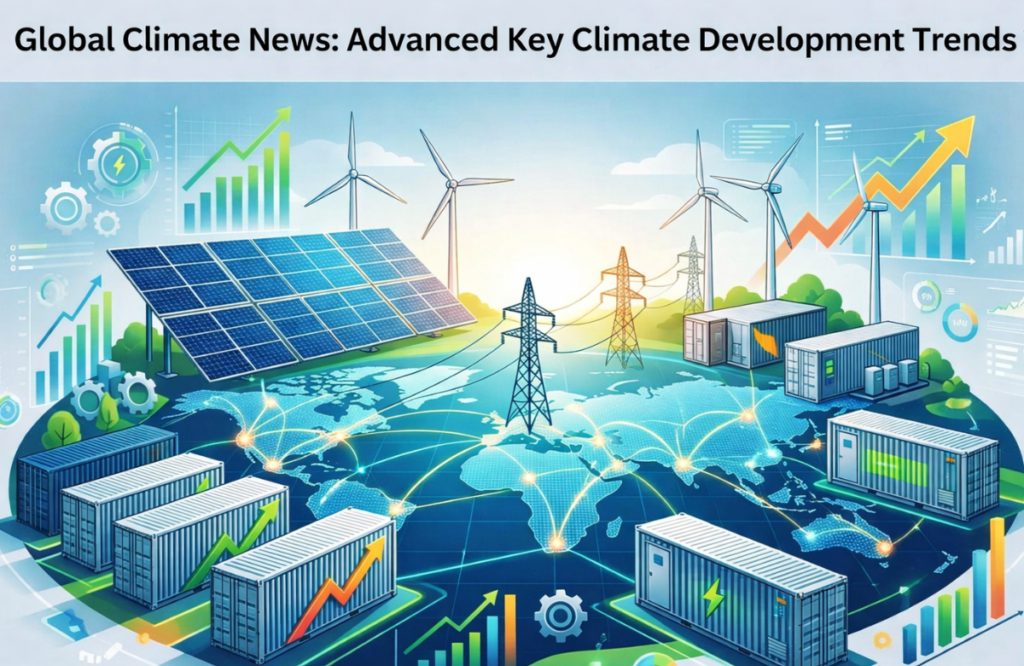
Investment in solar and wind energy has accelerated in 2026, reducing reliance on fossil fuels. Large-scale solar farms and offshore wind projects are being developed worldwide. Decreasing costs of renewable technologies make them more accessible and affordable.
Private sector investment is also driving rapid growth in clean energy capacity.
Government Initiatives
National policies in the USA and other countries are incentivizing clean energy solutions to reduce carbon emissions.
Technological Advances
Improved energy storage and efficiency technologies enhance the impact of renewable systems.
climate change adaptation strategies
Implementing climate change adaptation strategies is essential to mitigate risks from rising seas, erratic weather, and temperature extremes, as highlighted in Global Climate News. Governments develop early warning systems and disaster preparedness plans to reduce climate-related risks. Investing in resilient infrastructure helps communities withstand extreme environmental conditions. Public awareness and policy support play a key role in effective adaptation efforts.
Urban Planning Innovations
Cities are redesigning infrastructure, improving water management, and creating green spaces to adapt to climate challenges. According to Global Climate News, smart city technologies help monitor environmental changes and improve resource efficiency. Green buildings and energy-efficient designs reduce urban heat and carbon footprints. Public transport systems are enhanced to reduce congestion and emissions.
Agricultural Adjustments
Farmers adopt drought-resistant crops, improved irrigation, and soil conservation techniques to sustain food production. Crop diversification helps reduce dependency on a single type of produce. The use of modern technology, like climate forecasting, improves farming decisions. Sustainable farming practices protect soil health and increase long-term productivity.
Deforestation and Biodiversity Loss
Forest Management Practices
Reducing deforestation and promoting reforestation helps maintain biodiversity and carbon absorption. Sustainable logging practices and controlled land use planning also help preserve forest ecosystems. Community involvement in forest protection ensures long-term conservation success. The use of modern monitoring technologies helps prevent illegal deforestation activities.
Wildlife Conservation
Protecting endangered species and restoring habitats are essential for ecological balance. Establishing protected areas like national parks helps wildlife thrive safely. Anti-poaching laws and strict enforcement reduce illegal hunting and trafficking. Public awareness and education encourage people to support conservation efforts.
Global Collaboration
International agreements and conservation programs support sustainable land use and biodiversity protection. Countries working together can better address climate change and environmental threats. Sharing knowledge, resources, and technology improves global conservation strategies. Organizations and governments jointly fund projects to protect ecosystems worldwide.
Conclusion
The latest Global Climate News emphasizes the urgency of proactive measures and adaptation strategies. Rising temperatures, extreme weather events, renewable energy adoption, and conservation efforts are shaping the climate landscape in 2026. Understanding these trends and integrating climate change adaptation strategies empowers communities and nations to respond effectively, reduce environmental risks, and foster sustainable development for future generations.
What is the latest global climate news?
It highlights rising temperatures, extreme weather events, renewable energy growth, and biodiversity efforts.
How is climate change affecting the USA?
Increased heatwaves, hurricanes, floods, and droughts are impacting communities and ecosystems.
What are climate change adaptation strategies?
Measures like urban planning, agriculture improvements, and disaster preparedness mitigate climate risks.
Why is renewable energy important?
It reduces carbon emissions, decreases reliance on fossil fuels, and combats global warming.
How can individuals contribute to climate action?
Supporting sustainable practices, reducing energy use, and advocating for environmental policies helps protect the planet.
Informational Table
| Climate Factor | Key Trend 2026 | Impact on Society |
| Global Temperature | Continued rise | Heatwaves, droughts, wildfires |
| Extreme Weather | Stronger storms & floods | Infrastructure, health risks |
| Renewable Energy | Solar & wind expansion | Reduced emissions, energy security |
| Deforestation | Habitat loss continues | Biodiversity decline |
| Adaptation Measures | Urban planning, agriculture | Resilience to climate impacts |